The Yalecrest National Historic District.
A residential neighborhood on the east bench of Salt Lake City, platted between 1910 and 1938, remarkably intact a century later.
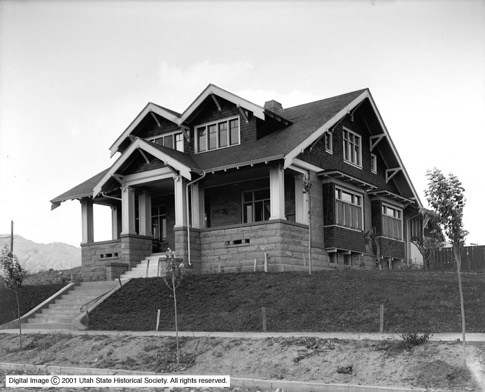
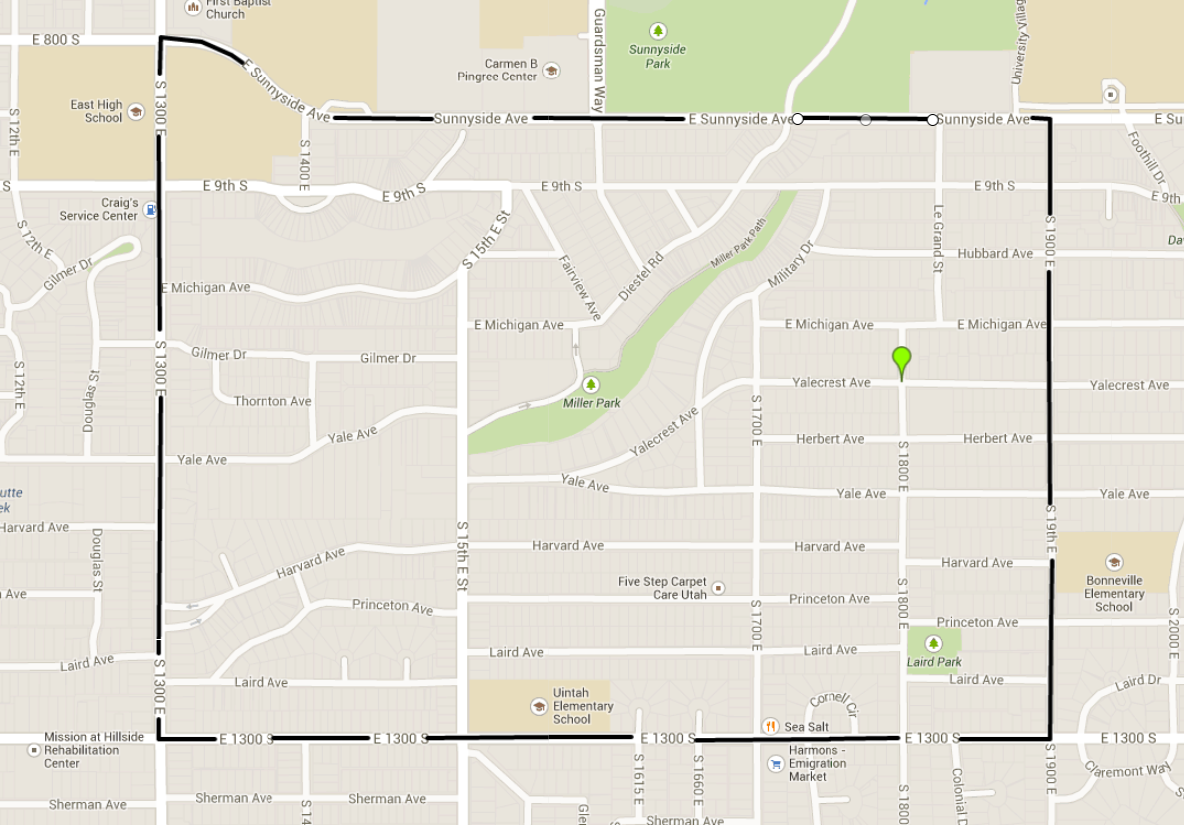
Salt Lake City's Yalecrest neighborhood is a mainly residential neighborhood located on the East Bench of Salt Lake City, eight blocks to the south and 13 blocks to the east of the downtown business area. The boundaries are 800 South (south side) to 1300 South (north side) and 1300 East (east side) to 1900 East (west side).
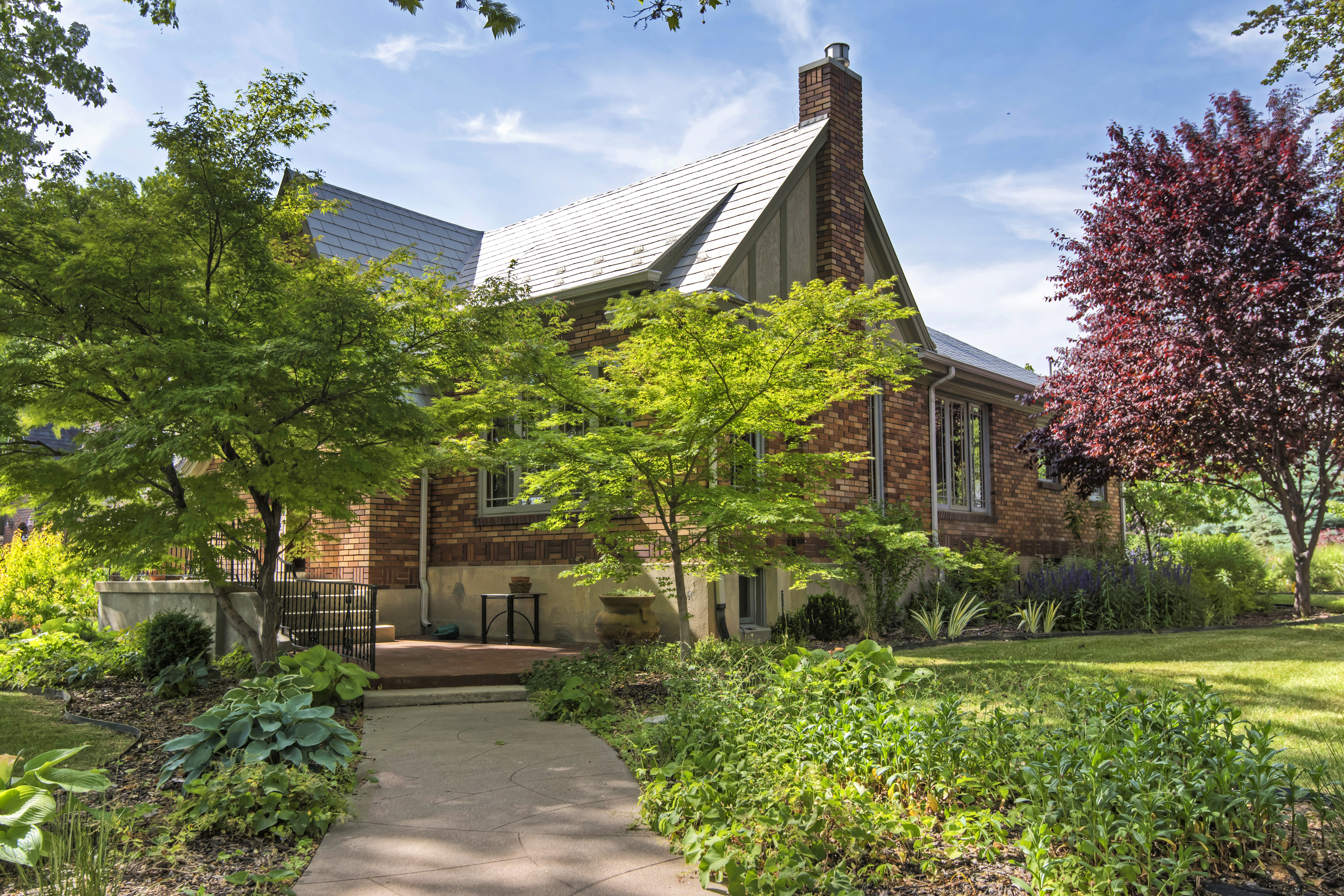
It is remarkably visually cohesive, with the majority of houses built in subdivisions of period revival-style cottages in the 1920s and 1930s. The Yalecrest Neighborhood consists primarily of residential buildings — 1,487 homes, three LDS churches, three commercial buildings, one school, and two parks. Single family houses dominate the area but there are also duplexes. The neighborhood is also known as "Harvard-Yale" based on the name of two of its streets. The streets of Princeton, Harvard, and Laird above 1700 East were originally named Kelsey, Edith, and Hampton but were later changed.
Early History
The property that is now Yalecrest was distributed by Church of Jesus Christ of Latter-day Saint authorities by lot for use in raising crops and farming. The earliest identified residents in the Yalecrest area begin to appear in the 1870s. A 10-acre plot belonging to Gutliffe Beck was located near Yalecrest between 1700 and 1800 East; his early 1870s adobe farmstead was located near the intersection of Yalecrest Avenue and 1700 East, and the property was later used as a dairy farm. Paul Schettler's farm, near 1900 East and Herbert Avenue, had crops that included silk worms and mulberry orchards. On Sunnyside between 1800 and 1900 East, Jim Carrigan built a house c. 1876 and farmed 45 acres. No remnants of these early homes are known to remain.
Early 20th Century Development
A number of factors contributed to Yalecrest area development in the early 20th century. The population of Salt Lake City increased rapidly at the turn of the century, almost doubling from 1900 to 1910. Air pollution from coal-burning furnaces added to the smoke-filled air of the valley, making the cleaner air of the east bench attractive for residential development. Transportation options made Yalecrest easily accessible — the streetcar line along 1500 East serviced Yalecrest commuters to downtown Salt Lake City.
National Historic District
In 2007, Yalecrest was listed as a National Historic District on the National Register of Historic Places. At that time, 91 percent of the homes in Yalecrest retained a high degree of historic integrity. The neighborhood is locally significant both architecturally and historically for its association with the residential development of the east bench of Salt Lake City in the first half of the twentieth century. Its tract period revival cottages represent the boom and optimism of the 1920s and 1930s in Salt Lake City.
The architectural variety and concentration of period cottages found in Yalecrest is unrivalled in the state, with 74 percent of homes built from 1920–1939. These houses exhibit a variety of period revival styles, with the largest portion being English Tudor and English Cottage styles. Examples from Yalecrest are used to illustrate period revival styles in the only statewide architectural style manual.
Subdivisions and Builders
The neighborhood comprises 22 subdivisions platted from 1910 to 1938. A district of small cottages from 1500 to 1600 East on Princeton and Laird Avenues was largely constructed by Samuel Campbell — Princeton in 1924 and Laird in 1925. Campbell built more than sixty houses in Yalecrest between 1913 and 1930.
The street grouping of Harvard, Princeton, and Laird between 1300 East and 1500 East is known as Normandie Heights, the last large subdivision to be platted in Yalecrest, with homes built between 1926–1935. It is distinctive for its picturesque rolling topography with landscaped serpentine streets, deep setbacks, and large irregularly shaped lots. Builder Gaskell Romney* was involved in developing Normandie Heights and lived at 1442 Princeton Avenue.
Prominent Architects
- J.C. Craig — House at 1327 E. Michigan Avenue
- Lorenzo S. Young — Bonneville LDS Ward; House at 1608 E. Michigan
- Glen A. Finlayson — Unusual Art Deco House at 973 Diestel Road
- Slack Winburn — House at 979 South 1300 East (studied architecture in Toulouse, France)
- Fred J. Swaner — House at 871 South 1400 East
- Dan Weggeland — Normandie Heights
- Raymond Ashton — George Albert Smith House at 1302 Yale; Sprague Library
- Walter Ware — House at 1607 E. Yalecrest for Charles and Minnie Miller
- Taylor Woolley — Frank Lloyd Wright-trained architect; 1408 Yale Avenue
The 1925 red brick Colonial Revival Yale LDS Ward Chapel at 1431 Gilmer Drive was designed by Taylor Woolley of Evans and Woolley and built by Gaskell Romney*. Both Woolley and Romney were residents of Yalecrest. The Bonneville Stake History Book (1977) notes that the cornerstone was laid September 24, 1924 and the chapel proper was completed March 8, 1925.
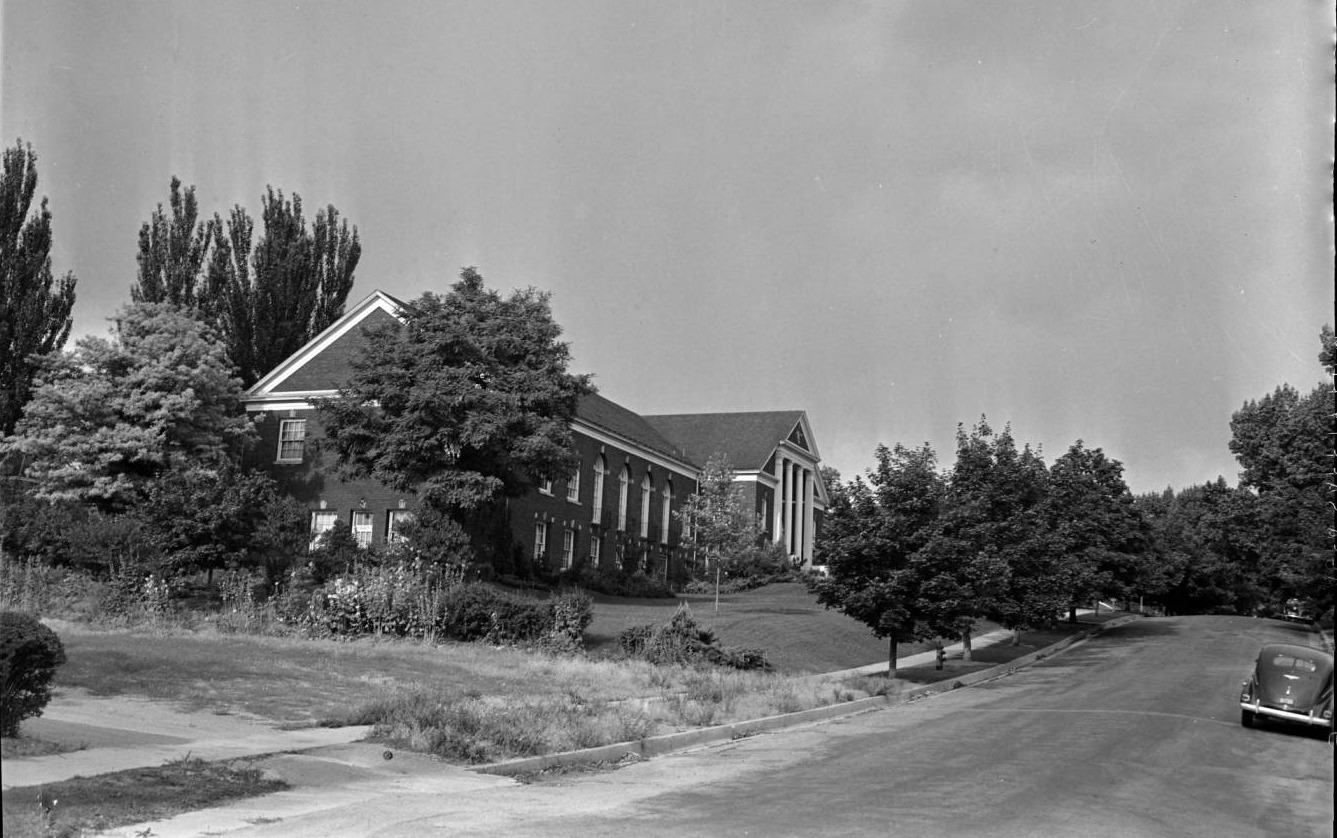
The Art Deco Yalecrest Ward Chapel at 1035 South 1800 East was built in 1936 of exposed reinforced concrete.
Construction of the Bonneville Ward at the east entrance to Miller Bird Refuge and Nature Park began in 1949 and was completed in 1950. Land that was previously part of Miller Bird Refuge and Nature Park was used for the chapel and stake building. Its red brick Postwar Colonial Revival style building was designed by Lorenzo S. Young and constructed by Jacobsen Construction Company in 1949. Bonneview Drive was originally a private drive owned by the LDS Church to access the property but was later made a public street.
Miller Bird Refuge and Nature Park
Miller Bird Refuge and Nature Park follows the course of Red Butte Creek on both sides of its ravine and originally extended from 900 South to 1500 East, but now stops at Bonneview Drive — a 1945 land swap gave the southern section of the park to the LDS Church in exchange for property that became Laird Park, on 1800 East between Laird and Princeton. The park is named for Lee Charles and Minnie Viele Miller, who lived at 1607 Yalecrest. After Lee Charles's death in 1930, Minnie Miller donated property in his memory along both sides of Red Butte Creek to the city.
Duffin's Grocery Store
Duffin's Grocery Store was built in 1925 at 1604 Princeton and run by Clarence Duffin in conjunction with William Wood & Sons meat market. Duffin's was the only market within Yalecrest and was designed with the same setback as the surrounding houses so it would blend in. The property has since been converted into a personal residence.
Commercial Buildings
Three commercial buildings sit on the outskirts of Yalecrest at 1700 East and 1300 South, housing two restaurants — 108 and Nomad — and a pharmacy and gift shop.
Uintah Elementary School
Uintah Elementary School was constructed in 1915 to support the growing elementary school age population of the East Bench. It was built encircled by vacant land but was soon filled to capacity as the surrounding residential sections grew. The school was enlarged in 1927, and in 1995 the old school was torn down after a new school was constructed on the upper playground from 1993–1995.
*Gaskell Romney is the father of George W. Romney, former Michigan Governor and U.S. presidential candidate, and grandfather of Mitt Romney, former U.S. Senator and presidential candidate.